The Moments That Made the 2026 Women’s Road Season
Kasia on Ventoux, Wiebes at full speed, Vollering’s fightback, Reusser against the clock, Pieterse’s many roles and Blasi’s breakthrough — fourteen moments and themes worth remembering.
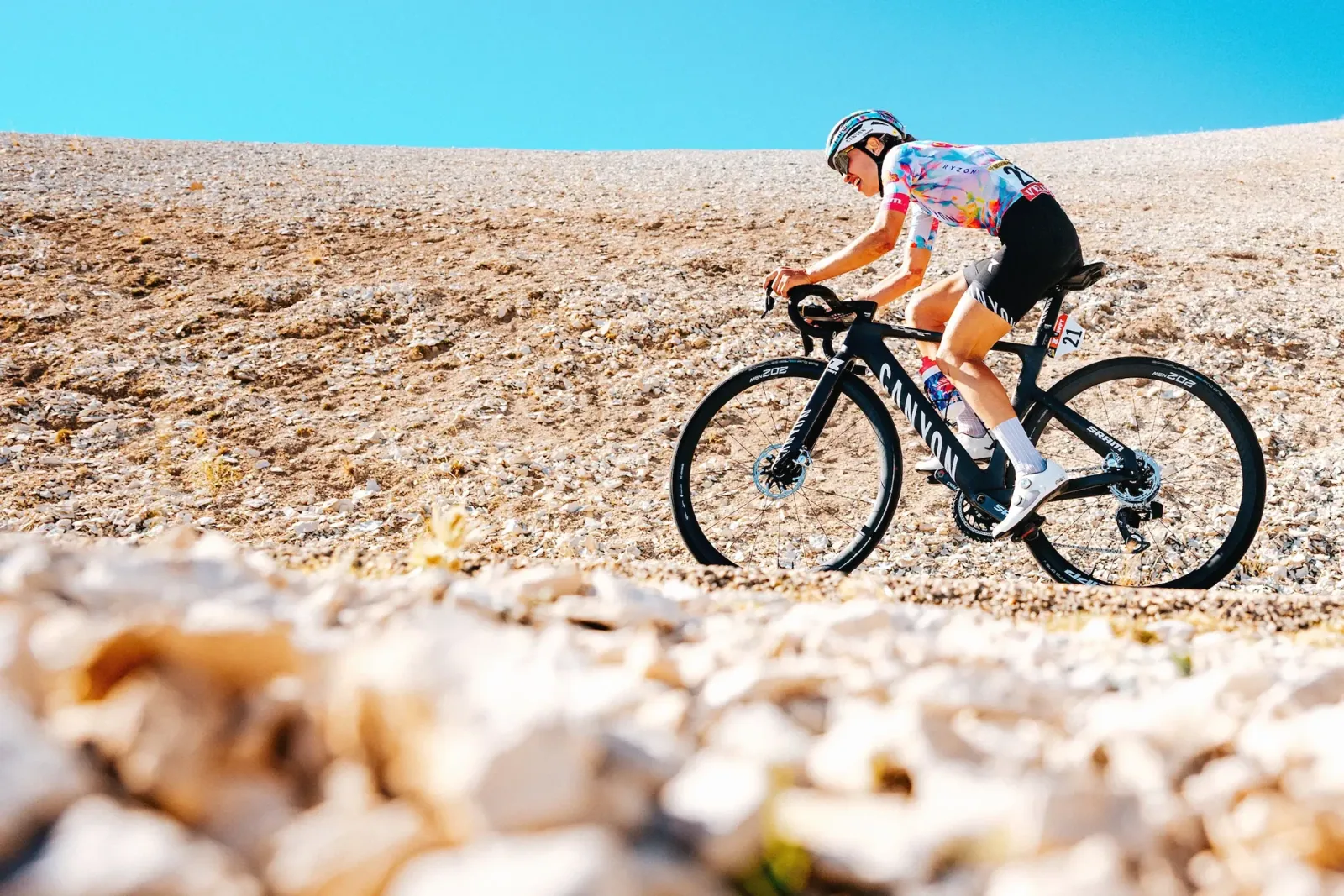
A season is not a spreadsheet. The spreadsheet says who won; memory keeps the moment before the result was settled. An attack into the trees on Mont Ventoux. A sprinter searching for her lead-out in the last corner. A young rider turning a mountain finish into a Grand Tour breakthrough. A teammate emptying herself so somebody else can wear rainbow. Those are the images that stayed with us in 2026.
With Chongming Island closing the Women’s WorldTour on October 11, this is our road-season retrospective as of October 12 — an editorial selection, not a ranking of whose win mattered most. Lower-category road events and the coming Track World Championships are separate unfinished chapters. The women’s Guangxi race was cancelled. Here are fourteen moments and themes worth carrying into the off-season.
01 · Kasia and the Giant of Provence
The scene that best explains why people fall in love with this sport happened on Mont Ventoux. Kasia Niewiadoma-Phinney went over Demi Vollering’s acceleration with 9.7 km (6.0 mi) remaining and kept going. Behind her, Vollering and Marlen Reusser could not agree on the chase. Ahead lay forest, exposed limestone and the first women’s Tour finish on the Giant of Provence. Kasia turned that hesitation into the ride of her life.
She won stage seven by 1:16 over Vollering and took yellow by fifteen seconds. This was her first Tour de France Femmes stage victory, two years after winning the whole race without a stage. The larger Tour ultimately belonged to Vollering. The mountain belonged to Kasia. That distinction is the beauty of stage racing: one rider can win the season’s defining day without winning its final classification.
"I could see my dad crying, and I was like, ‘I just need to make them proud.’"
Read The Hour Kasia Conquered Ventoux for the tactical story and the published training-data context. The watts were not made public; the emotion was.
Ventoux attack, stage win, yellow jersey and the quotation about her father.: Tour de France Femmes — official stage report ↗
02 · Lorena made excellence look ordinary
Lorena Wiebes’s season finished with twenty-four road victories and a Chongming clean sweep. The repetition almost works against her: another sprint, another celebration, another result everybody expected. Yet expectation is something a rider earns. Rivals still have to contest the same corners, survive the same pressure and make the same decisions at speed. She kept turning those decisions into victories.
Her Tour green jersey and back-to-back opening stage wins were the most visible part of that pattern. Chongming supplied its final punctuation: all three stages and the overall title. Twenty-four is one below her twenty-five-win 2025 personal best, not a new all-time single-season record. The remarkable thing is that she sustained almost the same winning volume. Our 24-win feature separates the sprint story from the counting rules.
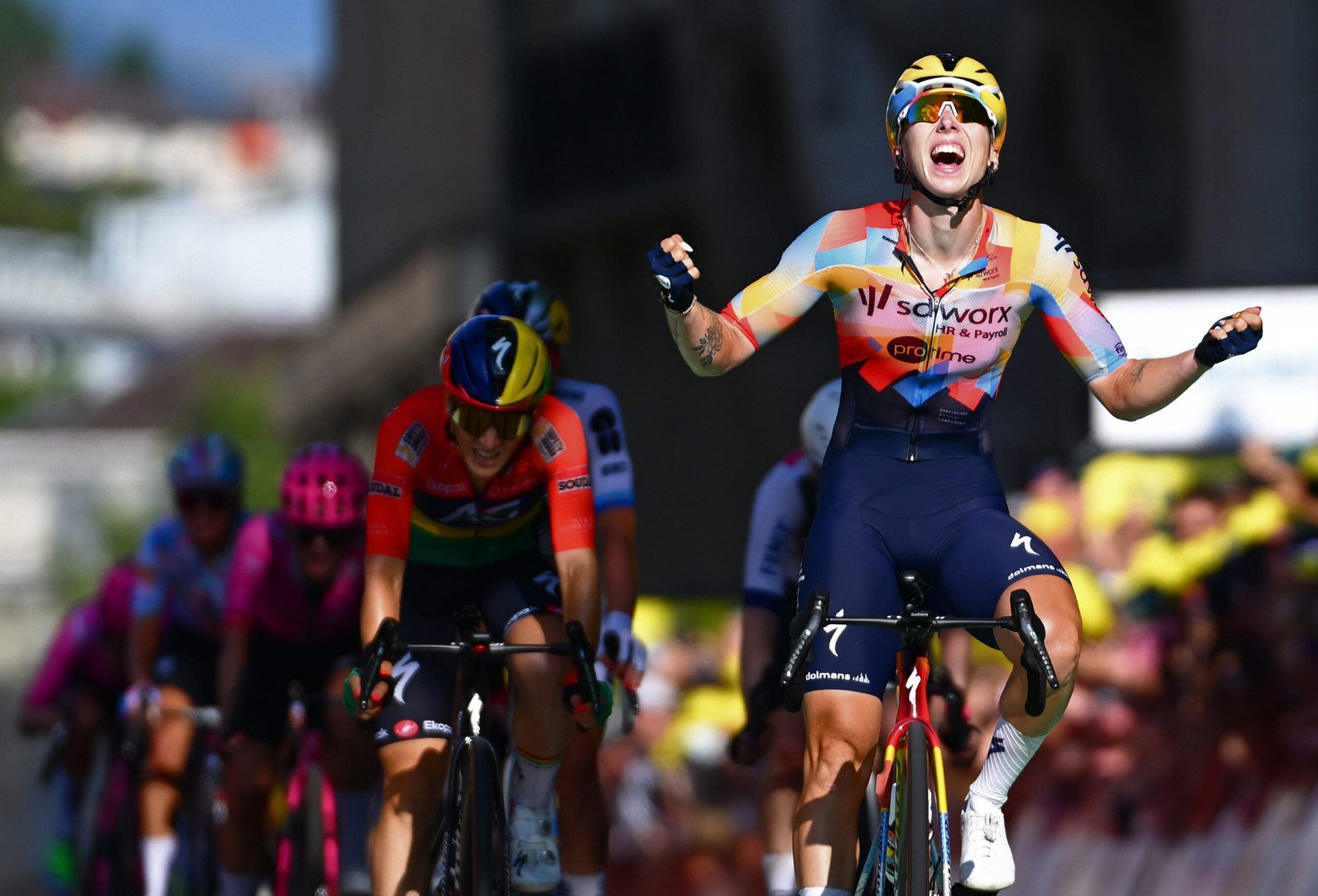
The three-stage sweep and team-confirmed 24-win road total.: SD Worx–Protime ↗
03 · Demi’s dominance included a fightback
Demi Vollering won the Giro and Tour double, then added the world road title. It is tempting to let that list erase the uncertainty in between. The Tour was not a procession. Reusser led after the time trial; Kasia took yellow on Ventoux; Vollering had to turn the race back in her favour on the roads above Nice. Her general-classification dominance was not the absence of resistance. It was the ability to answer it.
The final Tour stage brought her third stage win of the race and a second overall Tour title. That is the strongest version of a GC favourite: capable of absorbing a tactical defeat, coming back the next day and then finishing the job herself. The Giro–Tour double belongs in the headline. The recovery from Ventoux belongs in the story.
Tour classification, jersey winners, three Vollering stage victories and the Giro–Tour double.: Domestique — final 2026 Tour classifications ↗
04 · Reusser owned the race of truth
The time trial is called the race of truth because the usual negotiations disappear. No wheel to shelter behind, no teammate to close the gap, no sprint train to deliver a finishing effort. Marlen Reusser made that discipline one of the season’s clearest statements. She defended her world title in Montréal on her thirty-fifth birthday, then won a record fifth European elite time trial title in Šenčur.
At the European time trial, she covered 22.1 km (13.7 mi) in 31:30, twenty-three seconds quicker than Vollering. Reusser was fastest at every checkpoint. Her road-racing presence, including yellow at the Tour and European road bronze, made her more than a specialist. But against the clock, the simplicity of the result was its own spectacle: the strongest rider making the measurement unmistakable.
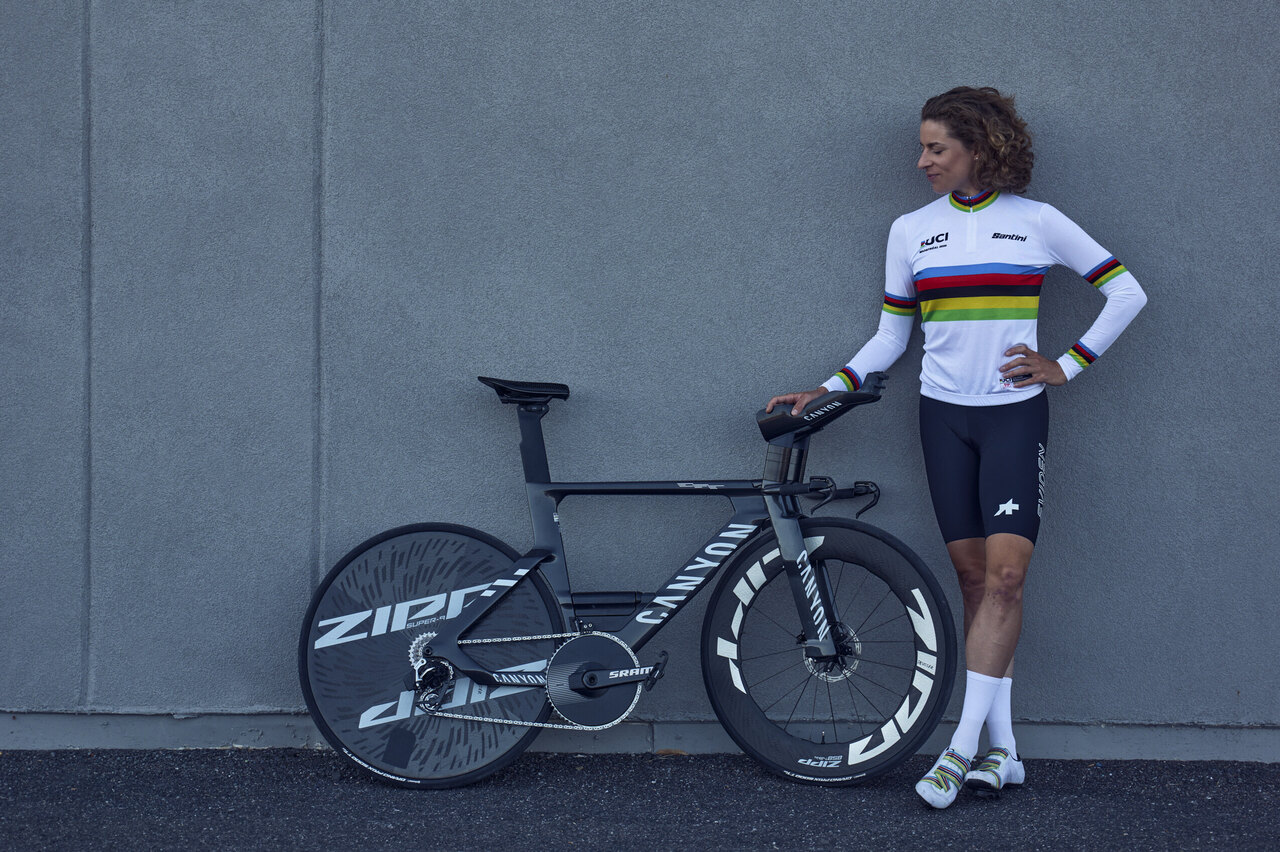
World time trial title on her birthday.: UCI — opening day of the 2026 Road World Championships ↗
Fifth European title, distance, time, winning margin and checkpoints.: Cyclingnews — European time trial report ↗
05 · Puck could be the star and the launch pad
Puck Pieterse’s move deeper into road racing is not a simple abandonment of mountain biking or cyclo-cross. It is an expansion of what she can do with the same instincts: read the terrain, commit to an effort, recover, go again. The Tour mountains jersey gave her an individual prize across nine demanding days. Her championship rides showed an equally important skill — choosing when her strength should serve somebody else’s result.
In Montréal she provided the key acceleration for Vollering’s attack and still finished sixth. At the Europeans she again helped launch Demi, then raced intelligently behind the leader and won silver. That is the individual, teammate and domestique story in one rider: not three contradictory identities, but three ways of influencing a race. Working for the designated leader did not erase her own quality. It made the Dutch plan stronger.
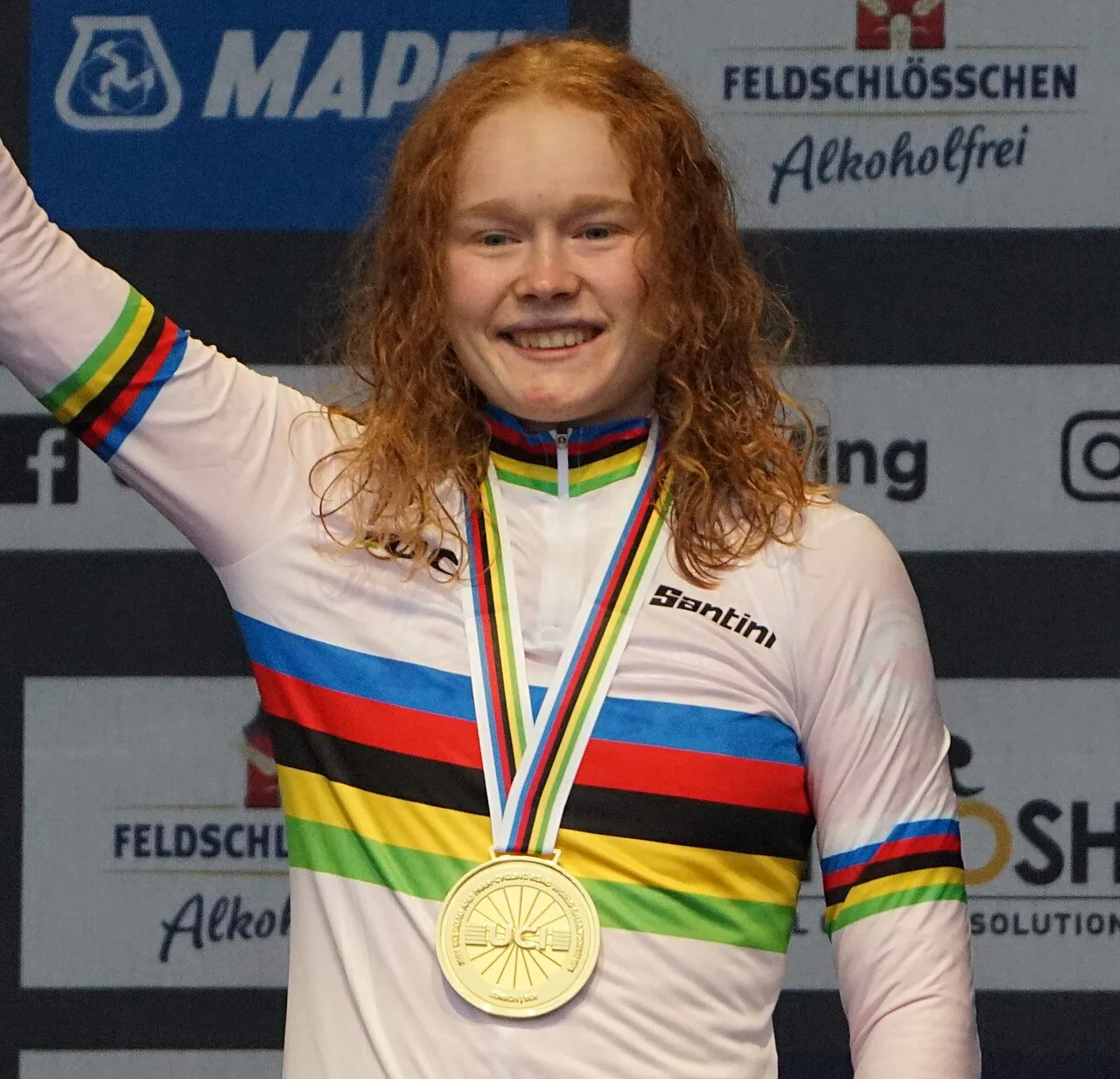
The bigger context is our multidiscipline generation feature. Pieterse is compelling because the road does not flatten her personality into one role. She can hunt a jersey, make a selection for a teammate, and still sprint for a championship medal.
Her launch-pad role for Vollering and sixth place at Worlds.: Cyclingnews — Pieterse at the World Championships ↗
Her European team role and silver medal.: IDL ProCycling — Pieterse’s post-race account ↗
06 · Paula Blasi changed the GC conversation
Paula Blasi’s La Vuelta Femenina breakthrough was not just a young rider announcing herself. It changed the list of people the established contenders would have to watch. On the final day, with the Alto de l’Angliru deciding the race, she overturned Anna van der Breggen’s lead and won the overall title. The first Spanish winner of the race also took its mountains classification.
The result makes the phrase ‘GC contender’ concrete. It is not a compliment based on potential or a good climbing performance in isolation. It is seven days negotiated well enough to arrive at the hardest finish with the legs and nerve to change the race. Blasi’s launch onto the WorldTour’s biggest stage gave the season a new protagonist, not merely a new name on a podium.
Blasi’s Vuelta overall and mountains titles, final-day turnaround and first Spanish overall winner.: La Vuelta Femenina — official final-stage report ↗
07 · Petra got the Angliru, too
The GC drama must not swallow the stage winner. Petra Stiasny won alone on the Angliru while Blasi won the overall race behind her. One finish, two different breakthroughs. Stiasny’s achievement deserves to stand on its own: she was the rider who reached the top first when one of cycling’s most intimidating climbs finally entered the women’s Grand Tour story.
It was a reminder that stage racing creates more than one kind of greatness. An overall champion needs consistency, calculation and recovery. A mountain-stage winner may get a single opening and have to spend everything. Our Angliru feature follows that separate, unforgettable victory.
Stiasny’s solo stage victory alongside Blasi’s overall win.: Cyclingnews — Vuelta final stage ↗
08 · Koch beat the numbers at Roubaix
Franziska Koch entered the Roubaix velodrome outnumbered by Marianne Vos and Pauline Ferrand-Prévot. The Visma pair had the tactical advantage; Koch had to survive it and still beat one of the greatest finishers in cycling. She did. The final sprint turned a numerical disadvantage into one of the season’s sharpest reversals.
Roubaix is often reduced to the romance of the cobbles. This finish was about something colder: positioning on the banking, the timing of the first move, and refusing to assume that two opponents meant defeat. Our Roubaix long-read explores why the race keeps breaking even the strongest plans.
Koch’s victory over Vos and Ferrand-Prévot.: Paris–Roubaix Femmes — official race report ↗
09 · Montréal gave the rivalry a rainbow finish
Vollering and Niewiadoma-Phinney met again at the end of the World Championships road race. The earlier solo did not settle it. The last lap turned the title into a duel, and Vollering finally won her first elite road rainbow jersey in the sprint. Elisa Longo Borghini took bronze. For anybody who had followed the Tour, the faces at the front made the stakes instantly legible.
The power of a rivalry is that neither rider’s story can be reduced to beating the other. Kasia had Ventoux and world silver; Demi had the Tour and rainbow. Each had made the other’s victories harder. Our Montréal recap preserves the final-lap sequence rather than pretending the medal table tells the whole race.
Vollering’s first road world title and the final duel with Niewiadoma-Phinney.: Cyclingnews — Montréal women’s road race ↗
10 · The Dutch team made cooperation visible
The European road race supplied another kind of memorable scene: a national team pulling in one direction. Wiebes worked for long stretches rather than saving herself for a sprint the course was unlikely to offer. Pieterse became the launch pad. Vollering finished the plan. Then Pieterse won the silver medal behind her. It was a Dutch one-two built from different strengths, not simply two stars happening to finish together.
Reusser took bronze and Longo Borghini fourth; Kasia’s late crash was the painful counterpoint to the medal celebrations. The European recap follows the result. The lasting season lesson is broader: domestique work does not make a world-class rider less important. Sometimes it is the reason a world-class team actually wins.
Wiebes’s pace-setting, Pieterse’s role and the Dutch one-two.: IDL ProCycling — European Championships post-race reporting ↗
11 · The Tour had more than one jersey story
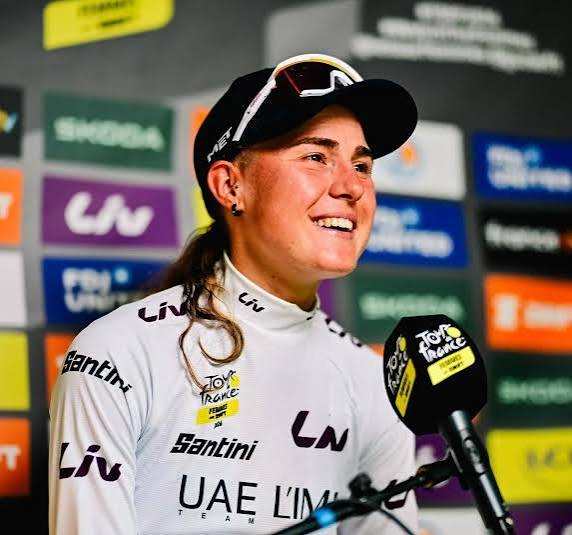
Antonia Niedermaier’s white jersey belongs beside Vollering’s yellow, Wiebes’s green and Pieterse’s polka dots. Those four classifications give a better picture of the Tour than the overall winner alone: the best stage racer, the most consistent points scorer, the mountains hunter and the young rider building a place among the leaders. Niedermaier’s recognition was a reminder to look past the familiar headliners.
A young-rider classification does not promise a future Tour victory. It records an achievement already made under the same heat, fatigue and pressure as everybody else. The off-season conversation should make room for that present-tense success, not only speculate about what it might become.
The Tour’s four final jersey winners, including Niedermaier’s youth classification.: Domestique — final 2026 Tour classifications ↗
12 · Gillespie made the last sprints a contest
The finale in China was not solely a Wiebes story. Lara Gillespie finished second overall, fifteen seconds behind, after pushing the Dutchwoman particularly hard on stage two. Clara Copponi completed the overall podium. When a dominant sprinter wins repeatedly, the most useful question is not whether her rivals failed. It is who found a way to put her under pressure and what made that possible.
Gillespie’s challenge is a good closing image for the road year: a favourite still winning, but not racing in a vacuum. The next generation of results starts with those closer finishes, improved positioning and small pieces of belief. We can celebrate the winner and notice the rider getting nearer at the same time.
Chongming overall podium and Gillespie’s stage-two challenge.: TOUR — Chongming season finale ↗
13 · Vigilia’s win asked who gets to be seen
Alessia Vigilia’s solo at the Giro dell’Emilia Donne was a career-changing result. It also became a conversation about coverage. Fans described being unable to follow the women’s race live with the same ease as the men’s event. Our Giro dell’Emilia report distinguishes the confirmed sporting result from broadcast complaints we could not independently verify in every detail.
The principle does not need exaggeration. A win cannot build the audience it deserves if the audience cannot find it. A full calendar, accessible viewing information and reporting beyond the biggest races are part of taking women’s professional cycling seriously. Vigilia’s moment was memorable because she won. The response was a reminder of how much visibility still matters.
Vigilia’s solo victory and career-best ProSeries result.: Cyclingnews — Giro dell’Emilia Donne report ↗
14 · The lead-outs deserve the last word
It would be easy to close the year with the champion lifting a trophy. Instead, look one rider back. At Chongming, Van Belle and Guarischi were delivering Wiebes. In the Dutch championship team, Pieterse was delivering Vollering. Elsewhere, domestiques were spending their days closing moves, collecting bottles and protecting leaders before the television cameras found the finale. The headline had one name because a much larger group made it possible.
That is the connection between the season’s apparently different stories. Kasia’s solo needed a lifetime of preparation. Demi’s GC wins needed recovery and support. Wiebes’s speed needed a road to launch into. Blasi’s breakthrough needed the opportunity to race for it. Reusser’s truth against the clock still came from a team environment. Our domestiques feature is the companion piece to every celebration in this list.
Wiebes’s account of the controlling riders and final lead-out at Chongming.: SD Worx–Protime ↗