The Engine Room: The Domestiques Who Decide the WorldTour
They carry bottles, close gaps and surrender their own results. From Demi Vollering's SD Worx years to her FDJ project, this is the work behind the winner.
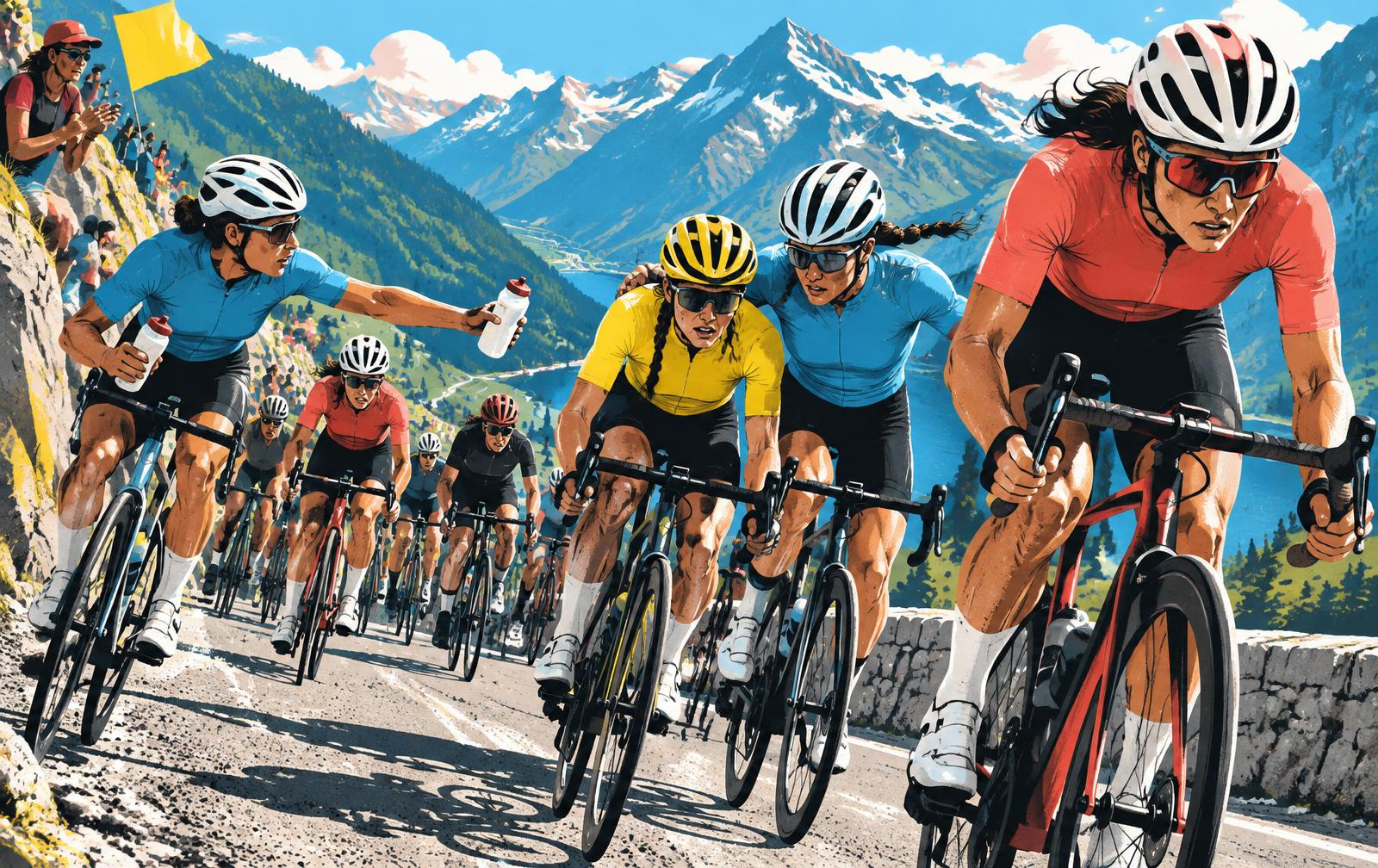
A leader wins a Grand Tour in the final kilometres. Her domestiques start winning it hours earlier: collecting bottles, closing breaks, surrendering wheels, lending clothing, pacing after punctures and spending the energy they might have used on their own result. The television camera finds the yellow jersey. The race is usually being decided just outside the frame.
The day the absence became visible
Stage 5 of the 2024 Tour de France Femmes made invisible work visible by removing it. Demi Vollering crashed while wearing yellow. SD Worx–Protime still had riders up the road, and Blanka Vas went on to win the stage, but only Mischa Bredewold dropped back to help her leader limit the loss. Vollering ceded the race lead to Kasia Niewiadoma and eventually lost the Tour by four seconds.
"I heard so much on the radio that I actually didn't know what to do. It was also not nice to see Demi lying on the ground."
The argument afterward — whether waiting would have changed anything, whether a stage win justified racing on — revealed the difficult truth of domestique work. Sacrifice is treated as automatic until a team has two legitimate goals. Then every bottle, every turn in the wind and every rider told to stop becomes a choice.
Demi's first engine room
Vollering's SD Worx years were built around riders whose own palmarès rarely explained their importance. Elena Cecchini described herself as Vollering's wingwoman and called working for her a joy. Christine Majerus spent eleven seasons in the Boels–Dolmans and SD Worx structure, winning races but becoming most valuable as the rider who could read danger, organize a chase and put a leader where she needed to be before anyone else saw the move.
"I've never really been the leader, but I know what I did on a daily basis was hugely important. I'm proud."
Elena Cecchini on rooming with and working for Vollering: CyclingUpToDate ↗
Majerus's career is the purest version of the role. A domestique can be strong enough to win and still decide that her best race is the one in which somebody else wins. That is not a lack of ambition. It is tactical expertise: knowing when a break is dangerous, how long a leader can be left alone and exactly how much of yourself the plan requires.
A new team, a new promise
When Vollering moved to FDJ–SUEZ for 2025, the promise was not merely that she would be the sole leader. It was that an entire group would choose the project. Évita Muzic, Juliette Labous, Amber Kraak, Marie Le Net and the team's other workers became the structure around her; Kraak's rowing engine and positional work made her especially useful when the race needed to be controlled before the mountains.
"We want to go one hundred percent for her."
The line matters because good leadership is reciprocal. A domestique gives away opportunity, but a leader must make the sacrifice legible: communicate the plan, trust the worker's judgement, acknowledge the labour and finish the job. The strongest rider cannot simply demand loyalty. She has to create a result worth belonging to.
The human yo-yo
Former pro Jess Allen called herself a “human yo-yo”: ride back through the convoy, load bottles, fight forward through a stretched peloton, distribute them, then do it again. Her first professional contract paid nothing. The anecdote joins the physical and economic versions of sacrifice — riders asked to empty themselves for a team while many below the WorldTour still struggle to make the job financially sustainable.
Jess Allen on domestique work and her first unpaid contract: Velo / Outside ↗
Results pages cannot record a bottle carried, a gap closed or a frightened leader guided back through a convoy. They cannot show the rider who reaches the hotel exhausted and without a result beside her name. But look carefully at any great victory — including Demi Vollering's — and the engine room is there. The podium belongs to one rider. The winning was collective.