Revenge in Slovenia? Who Can Stop Vollering at the Europeans
One week after Montréal, Kasia, Elisa, Reusser and Blasi get another shot at the world champion on the steep Možjanca circuit.
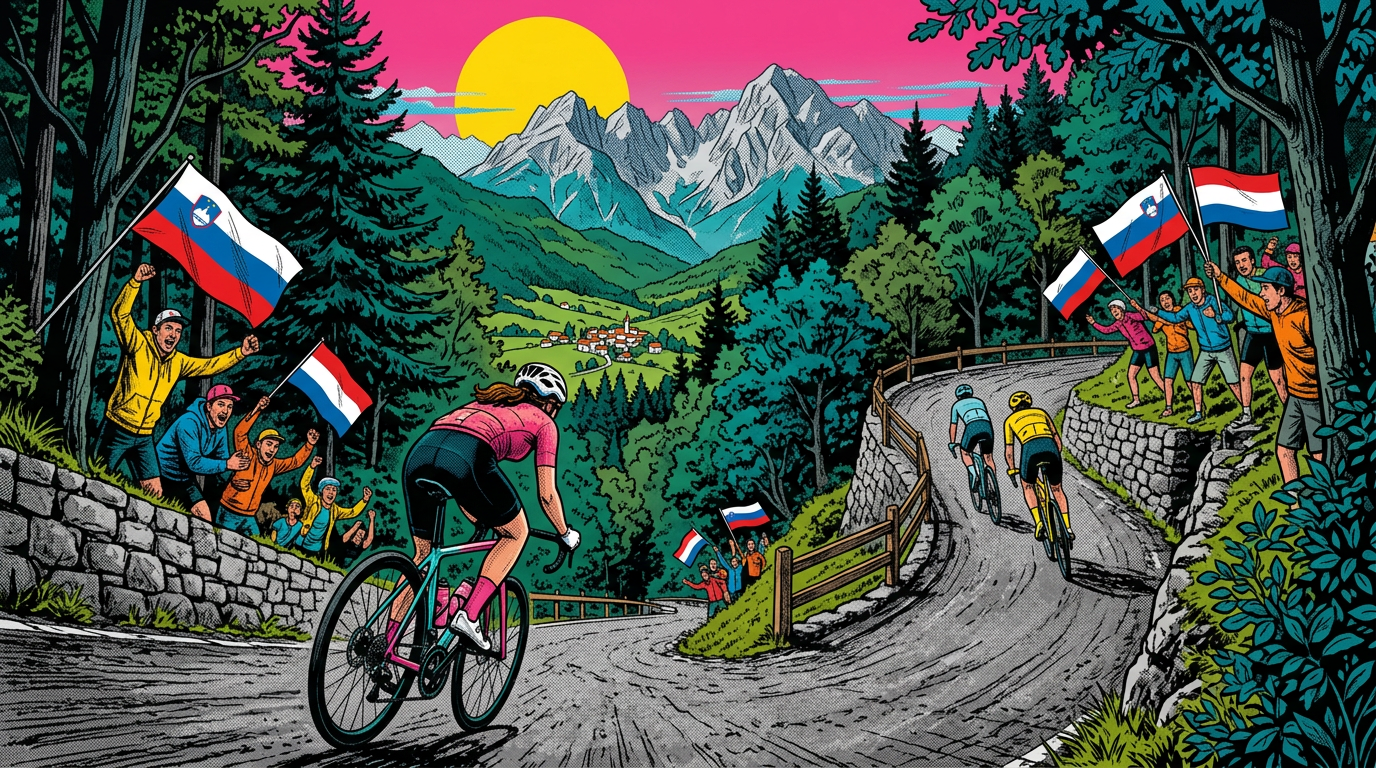
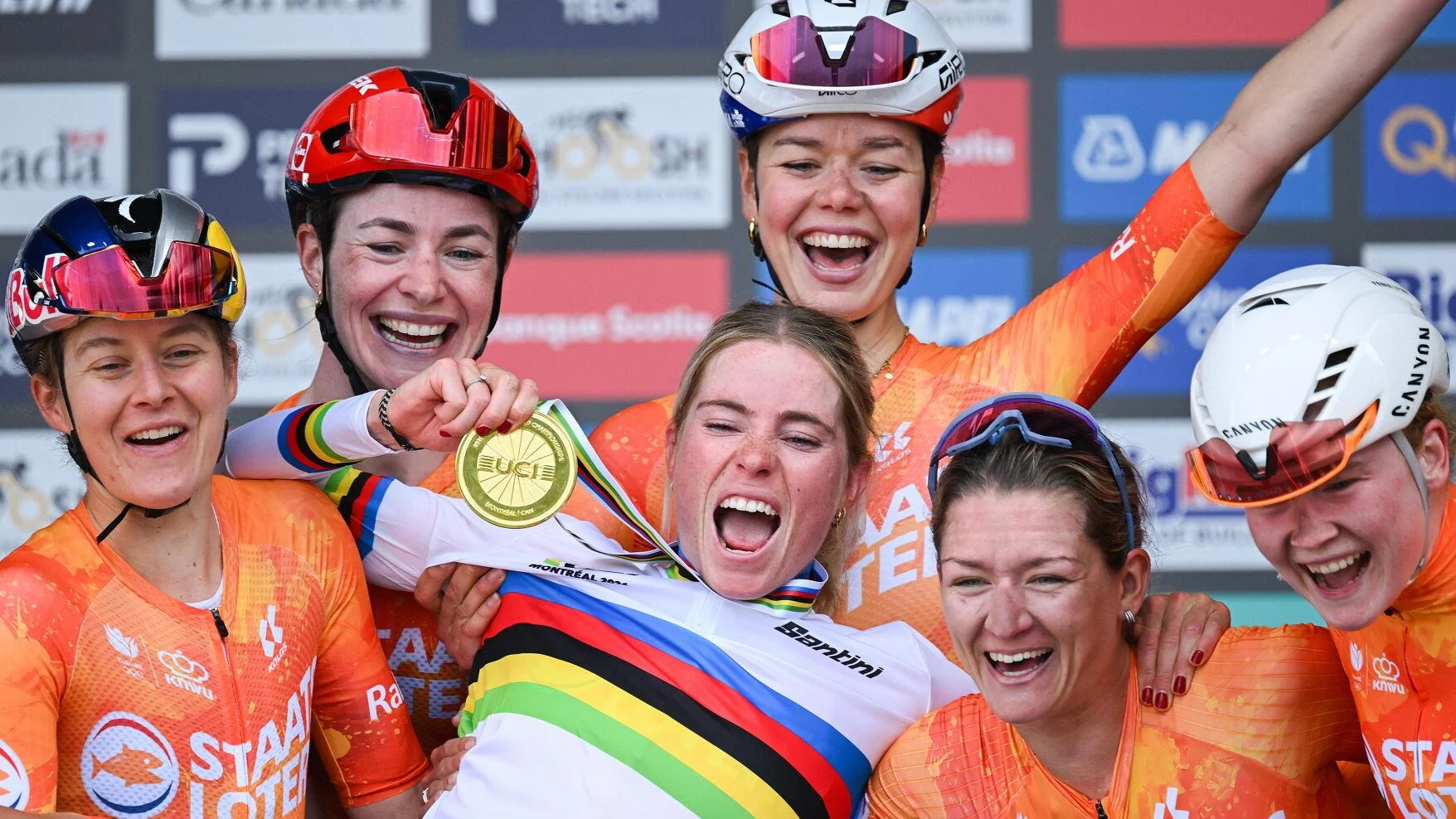
One week. That is all the peloton gets between the rainbow jersey and the next title. Demi Vollering won the World Championships in Montréal on September 26 by two-up sprinting Kasia Niewiadoma-Phinney. On Saturday, October 3, she starts the European Championships road race in Ljubljana, Slovenia, as world champion and defending European champion. Almost everyone who chased her up Mount Royal will be there again.
The course: one wall, two chances
The race covers 130 km (80.8 mi) with 1,359 m (4,459 ft) of climbing. After a 9 km (5.6 mi) neutral start through central Ljubljana, the first 85.8 km (53.3 mi) are mostly flat and run through Škofja Loka, Kranj and Kamnik. The race will be decided on two laps of a 22.1 km (13.7 mi) circuit around Šenčur. Each lap has 367 m (1,204 ft) of climbing.
The Možjanca climb is short enough for a sudden attack and steep enough to drop riders who are only hanging on. But the race doesn't finish at the top. That changes who it suits. A rider who crests 10 or 15 seconds clear can hold the gap on the descent. A group that hesitates after the top can grow again before Šenčur. With only two laps, the first time up Možjanca is a real attack point, not a warm-up.
Can Demi win again?
On form, Vollering is the favourite, and nobody really disputes it. She won this title in France in 2025 with a 37 km (23 mi) solo. In 2026 she has won the Giro and the Tour de France Femmes. In Montréal she attacked from 38 km (24 mi) out, was caught, and still won the sprint. A steep climb of about two kilometres is exactly the kind of effort where her climbing strength wins one-day races.
Her biggest advantage is the Dutch team. The Netherlands can race three ways: Vollering on the climb, Puck Pieterse on the attack, and Lorena Wiebes if a big group reaches the finish. That depth is also why every other nation has to make the race hard early. If Vollering reaches the bottom of the final Možjanca climb with teammates and the race still together, the others are racing on her terms.
Kasia: closest last time
No one came closer in Montréal than Kasia Niewiadoma-Phinney. She helped reel in Vollering’s long attack, followed every move on the last lap, made the Dutchwoman do the work and attacked on the last rise. She lost only in the sprint. Her season also backs her up: she won on Mont Ventoux and finished second overall at the Tour. Steep climbs late in a hard race suit her.
Her problem is tactics, not legs. Poland can’t match the Dutch numbers, although Dominika Włodarczyk, eighth at Worlds, gives her real support. Waiting for Vollering on the last climb gave Kasia silver last week. To win, she probably has to attack before Vollering does.
Elisa: the one most likely to break up the Dutch plan
Elisa Longo Borghini took bronze in Montréal, 4 seconds short, after spending the last lap trying to get away from the Vollering–Niewiadoma-Phinney pair. Slovenia rewards her habit of attacking where no one expects it. If she moves on the circuit before the steepest part of Možjanca, the Dutch have to use riders before Vollering wants to. Italy’s entry list, with Silvia Persico, Soraya Paladin and Erica Magnaldi, lets her race less predictably than if she were the country’s only option.
"Elisa Longo Borghini remains the rider most likely to disrupt the Dutch plan."
Reusser: in form, but the climb is steep
No one has better recent form on paper than Marlen Reusser. She defended her world time trial title on her 35th birthday, then finished fourth in the road race, eight seconds down, after staying with the best climbers. Možjanca is steeper than anything decisive in Montréal. That hurts a rider who wins with steady power. Her chance comes after the top: if she crests in contact, the rolling roads and fast run to Šenčur give her room to use her time-trial strength. She is also the reigning world champion going into the European time trial on October 7.
Paula Blasi: Spain’s wildcard
Paula Blasi won La Vuelta Femenina on the Angliru and finished fifth overall at the Tour de France Femmes. She has shown again and again that she can handle steep climbs late in a race, even without a summit finish. Spain’s support, including Mavi García and Usoa Ostolaza, can attack early so Blasi doesn't have to chase the favourites herself. Of the riders here, she is the least tested in championship finales. That also means the favourites are least likely to mark her.
What about Vos?
Marianne Vos won this title in 2017, but she is not among the Dutch riders on the official UEC entry list. The Netherlands' entries include Vollering, Pieterse and Wiebes, backed by Loes Adegeest, Femke de Vries, Yara Kastelijn, Amber Kraak, Femke and Riejanne Markus, Lieke Nooijen and Karlijn Swinkels. The document includes reserve riders, so it is broader than the final start list.
Who does the course suit?
Punchy climbers who can attack a 10% wall and stay away on a descent: Vollering, Niewiadoma-Phinney, Longo Borghini, Pieterse, Blasi. Power riders who need to crest in contact and then use the flat: Reusser. Sprinters, if the favourites mark each other: Wiebes, the 2024 European champion, who needs a group of 15 or 20 to reach the final 7 km (4.3 mi). France, with Juliette Berthet fifth at Worlds plus Maeva Squiban, Cédrine Kerbaol and Évita Muzic, have the numbers to attack before the final climb. Pauline Ferrand-Prévot is still on the entry list as a reserve, but Visma has said her season is over.
Our call
Vollering is the favourite, and Montréal suggests the others can’t beat her by following her. The best chance of revenge is a hard first lap from Italy, France or Poland, with the Dutch forced to chase before the final Možjanca. Then an attack from Kasia or Elisa before Demi chooses her moment. If it comes down to a small group sprinting in Šenčur, remember Montréal: Vollering already won that one. The race starts at 13:30 CEST in Ljubljana on Saturday, October 3; the race page shows that start in each reader’s detected time zone.