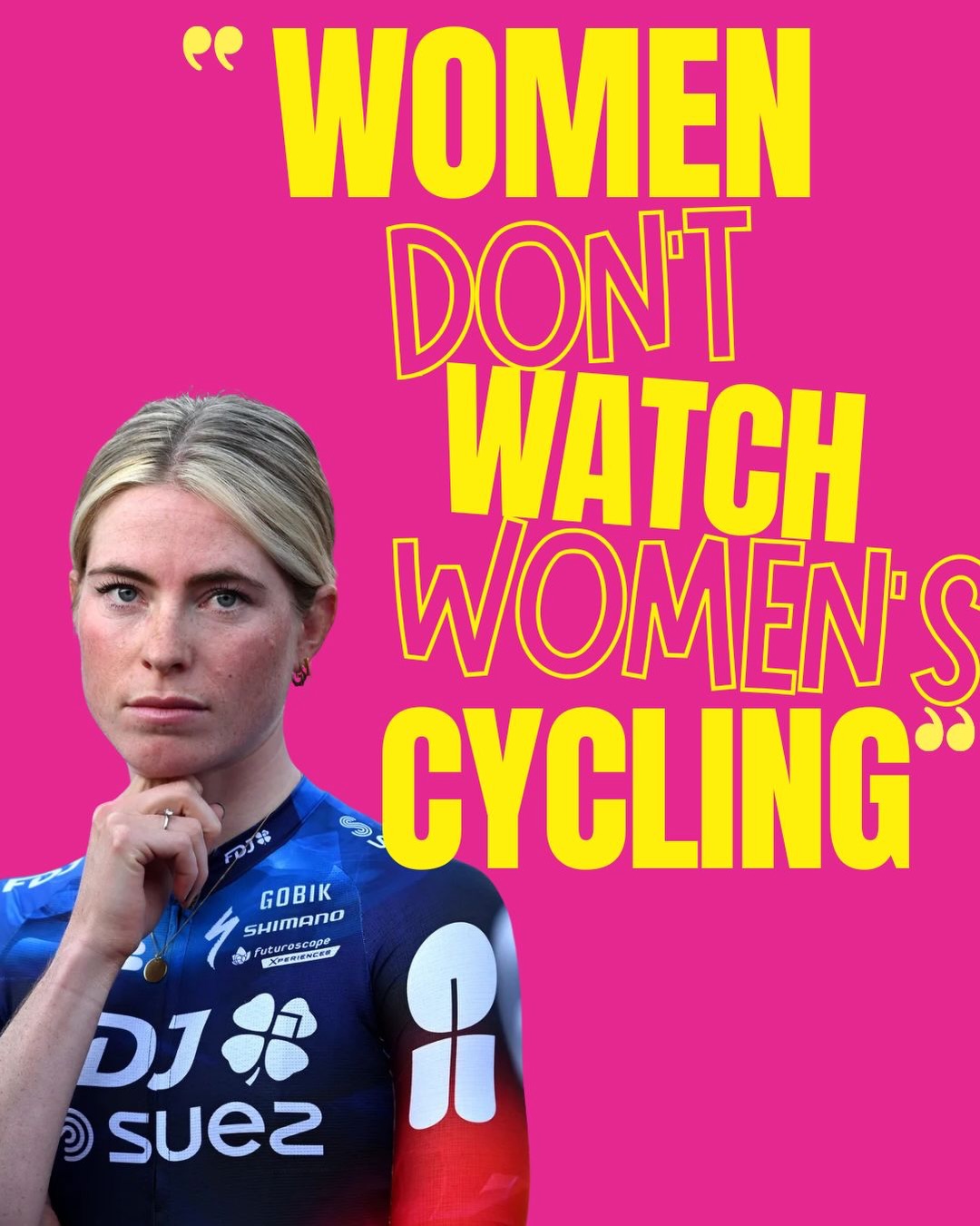
Women Don't Watch Women's Sports?
Women watch when great sport is visible and easy to find. Men watch too. The audience problem was always an access problem.
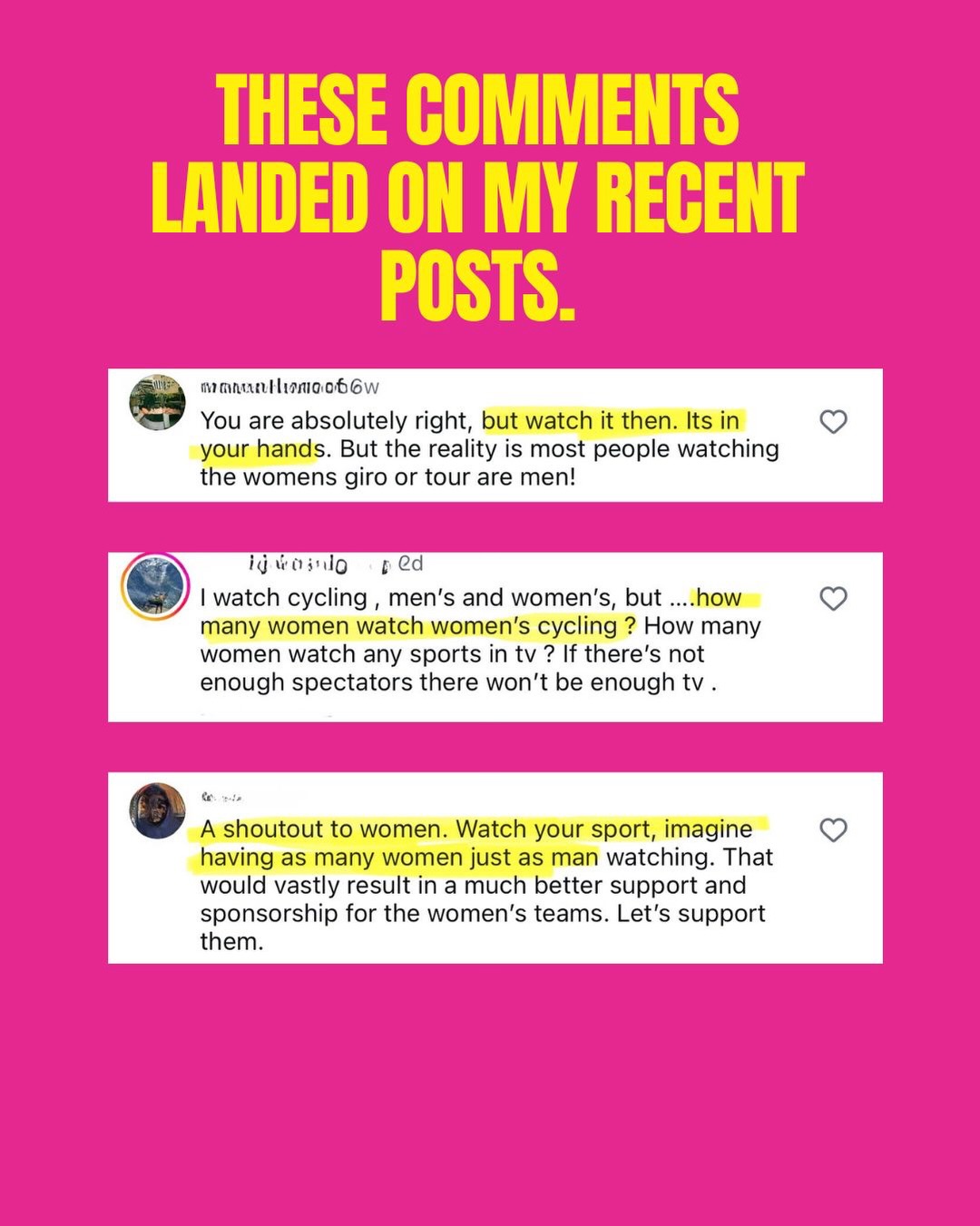
The accusation arrived in Emma de Blok's comments dressed as common sense: women do not watch women's cycling, so women should not complain about its smaller platform. It is a neat argument because it makes the audience responsible for an invitation the sports business spent decades refusing to send.
An audience cannot watch what it cannot find
Fandom is learned. Schedules become habits because leagues are placed in familiar windows, promoted between games, discussed on highlights shows and made easy to find again next week. For much of women's sport, that machinery either did not exist or required fans to hunt across channels, subscriptions and time zones. Calling the resulting audience small confuses distribution with desire.
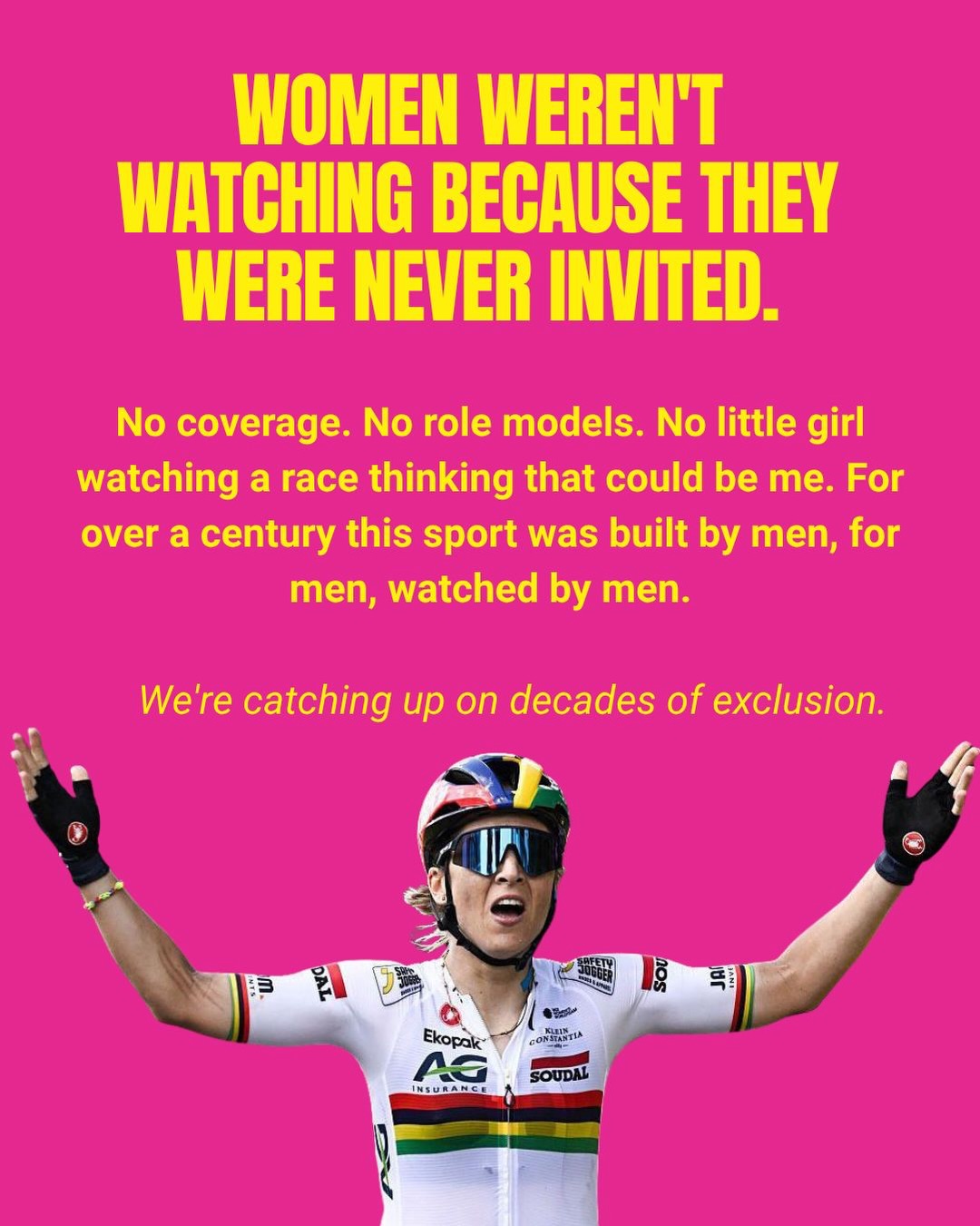
"Women weren't watching because they were never invited."
A 2026 SSRS poll puts a number on that friction. Fifty-nine percent of sports fans said they could access all or most of the sport they wanted, but only 42 percent of women's-sports fans said the same about women's sport. More games can help, yet scattering them among subscriptions can make the search harder rather than easier.
Access gap: SSRS Sports Poll, July 2026 ↗

Make it visible and people come
The strongest answer is not a hypothetical. Nielsen traced how the BBC moved women's football out of hard-to-find digital corners, expanded its match coverage and promoted major tournaments. UK viewing grew from 11.7 million in 2017 to 68.6 million in 2019; 57.9 million watched the 2022 European Championship. The audience did not materialise by accident. The sport was scheduled, signposted and treated like an event.
Visibility and UK women's football audiences: Nielsen, July 2023 ↗
That pattern keeps repeating. Nielsen reported that interest in women's sport reached half of the global population in 2024, up from 45 percent in 2022. ESPN's first Women’s Sports Sundays doubleheader in July 2026 averaged 947,000 viewers; its WNBA game averaged 1.6 million, 53 percent above ESPN's previous-season regular-season average.
Global interest: Nielsen 2025 Global Sports Report ↗
A premium window and its audience: ESPN Press Room, July 2026 ↗
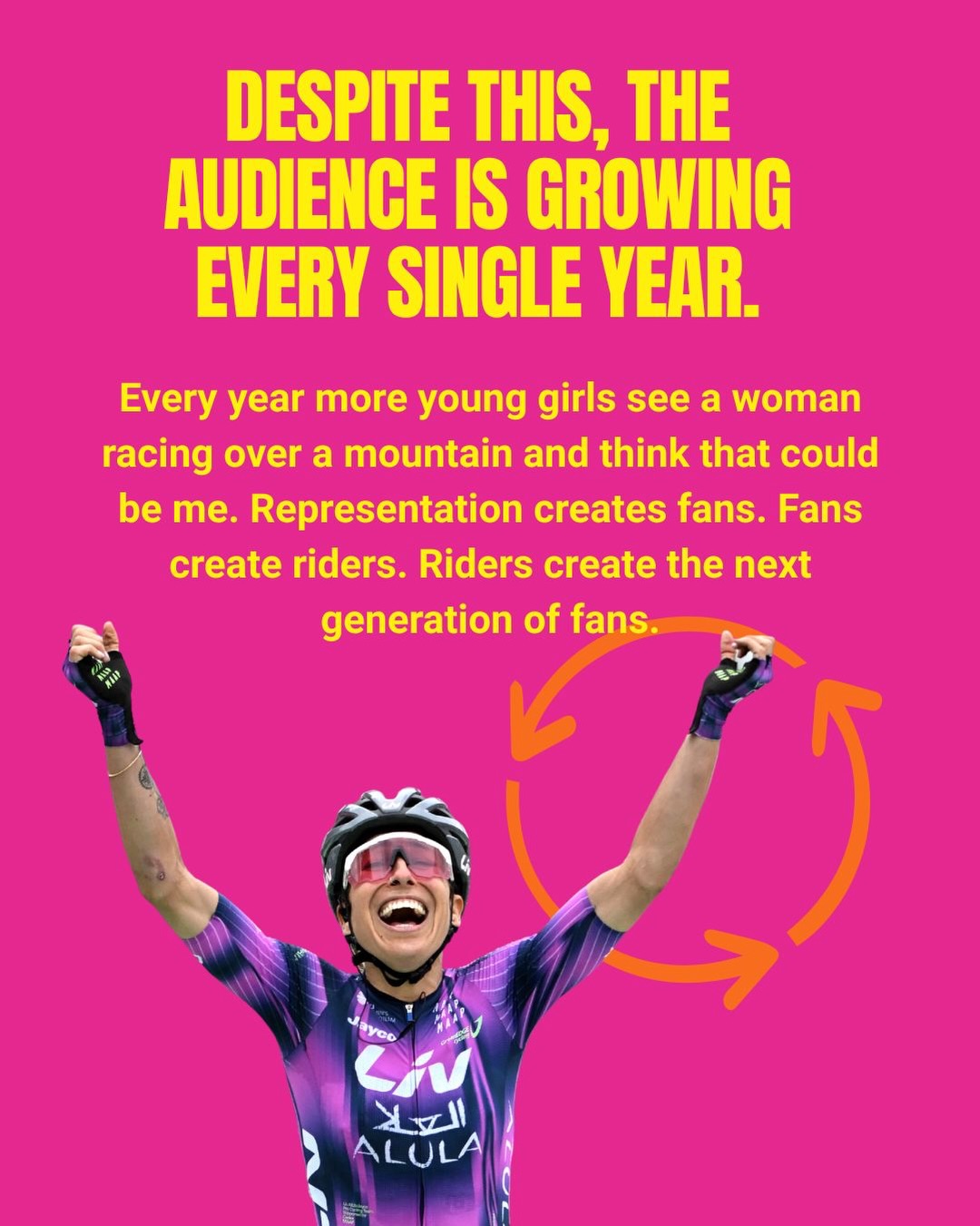
Women do watch. So do men.
There is a second mistake hidden inside the premise: women's sport is not a product intended only for women. Nielsen's 2025 global report found that 47 percent of women's-sports fans were women. Put the other way, 53 percent were men. That does not diminish the importance of welcoming more women; it exposes the absurdity of gender-testing an audience before deciding whether its sport deserves attention.
Who follows women's sport: Nielsen 2025 Global Sports Report ↗
"If you look at the gender breakdown for women's sports consumption, it's largely 50-50... But it shows that everyone is watching women's sports."
Piotrkowski said ESPN's own consumption was roughly evenly split, and described espnW's TikTok audience as 50-50. Her broader point is the useful one: this is not sport 'for women' in the restrictive sense. It is elite competition, made by athletes and enjoyed by fans. The audience crosses gender because good sport always has.
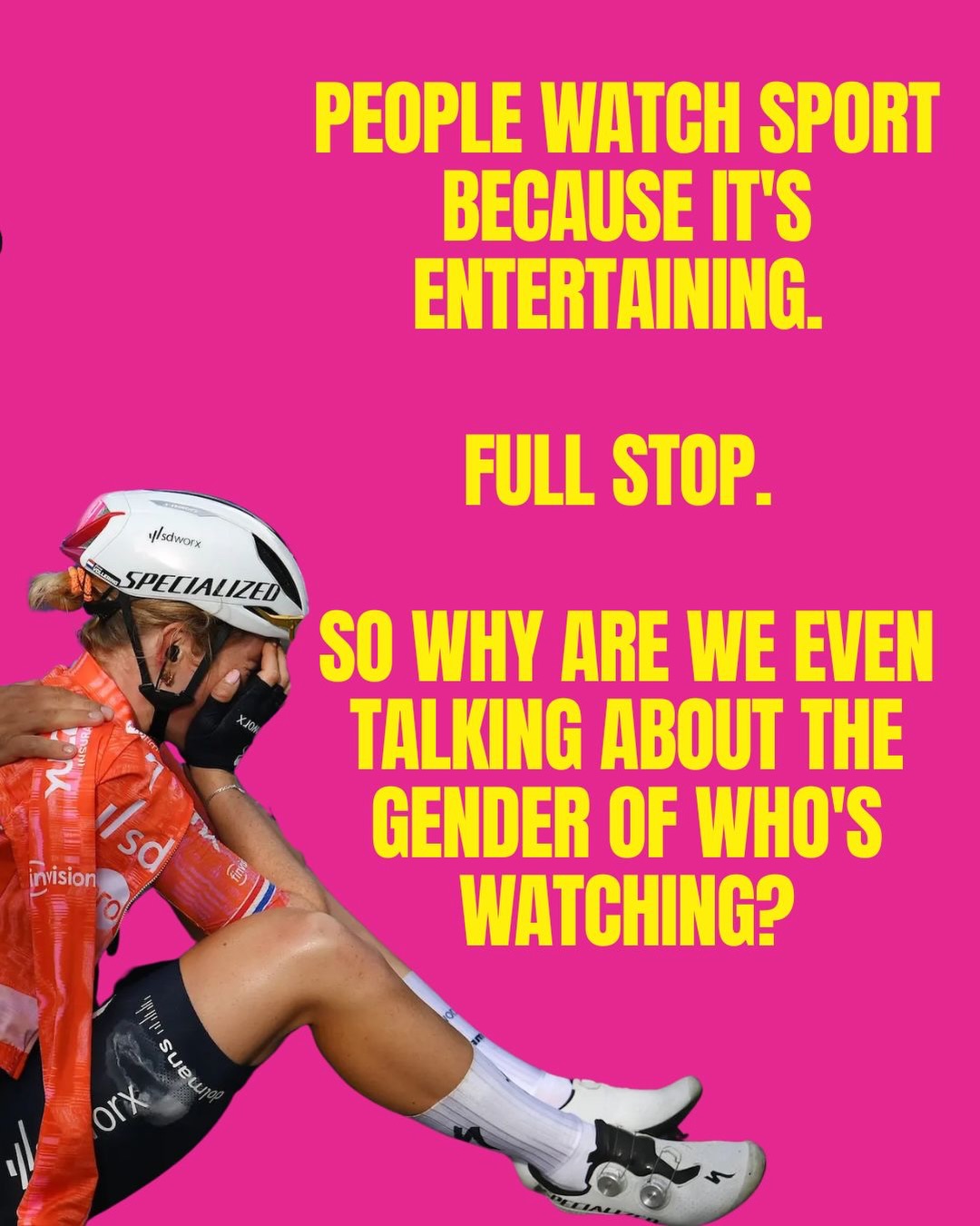
Invitation means infrastructure
An invitation is more than putting one final on television. It means a reliable home, a clear start time, highlights that build familiarity, reporting that explains form, and commentators who know the field. It means not asking a newcomer to solve a media-rights puzzle before she can become a fan. In cycling it also means treating the women's race as its own sporting event, not an abbreviated prelude to the men's broadcast.
This is why access has to change. Coverage creates knowledge; knowledge creates stakes; stakes create the urge to return. The audience is not a natural resource waiting to be discovered. Every sport builds one through repetition and care.

De Blok's carousel ended with the right invitation: watch the Tour de France Femmes not because you are a woman, but because it is brilliant racing. That is the future of women's sport in one sentence. Open the door. Tell people when it starts. Give the competition room to become familiar. Women will watch. Men already do. And the more people who are invited, the less anyone will mistake absence for indifference again.