The Fastest Woman Alive: Lorena Wiebes Is Winning Everything
Three UAE Tour stages, back-to-back Tour de France Femmes wins, four stages in Britain — and the power numbers nobody outside her team gets to see.
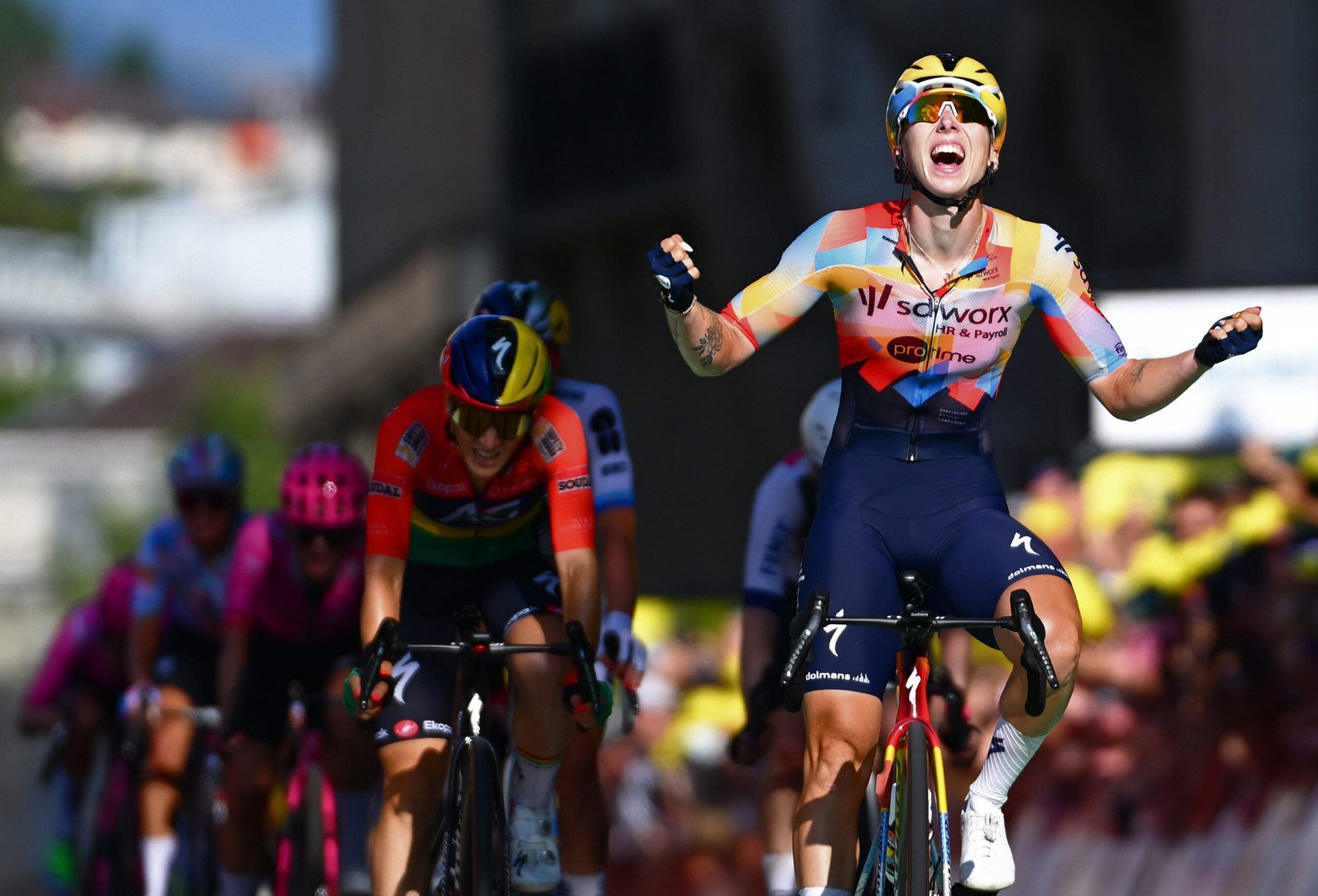
There is a moment in every bunch sprint when the race stops being a race and becomes a formality. In 2026, that moment has belonged to Lorena Wiebes. The SD Worx–Protime sprinter has spent the season turning the last 200 metres of bike races into a procession — from the opening stage of the Tour de France Femmes to four stages in one week at the Tour of Britain Women. Right now, there is no faster woman in road racing.
The 2026 win record
Start in February. At the UAE Tour Women, Wiebes won three of the four stages — the race was effectively hers every time the road stayed flat. Spring brought two more one-day wins: the Copenhagen Sprint, for the second year running, and In Flanders Fields, for the third consecutive edition. By the time the Tour de France Femmes rolled out, she was already the most successful rider of the season.
Between the Tour and Britain, Wiebes swept all three stages and the overall at the Tour de Pologne Women, and earlier in the summer took two stages and the points jersey at the Vuelta a Burgos Feminas. Her season ended with another clean sweep at Chongming Island. Read our 24-win season update for the finale and the precise record-book context: exceptional winning volume, not a new all-time single-season record.
The Tour was the exclamation point. Wiebes won Stage 1 and Stage 2 back to back — the first rider to open a Tour de France Femmes with consecutive sprint wins — and carried the green points jersey all the way to the finish. Two weeks later in Britain she did it again: four stage wins and the points jersey, finishing second overall behind a breakaway-friendly route. When a sprinter is second on general classification, the sprints were never close.
How she wins
Wiebes does not win sprints the way most sprinters do. There is no long, chaotic lead-out train and no waiting until 150 metres to go. Her pattern is position first: she reads the finale, finds the right wheel early — often a teammate's, often a rival's — and launches from the front before anyone else has started. By the time the others open their sprint, they are already looking at her wheel.
That style is a product of confidence as much as speed. A sprinter who launches early is betting she can hold top speed longer than anyone behind her. Wiebes makes that bet constantly, and in 2026 she has almost never lost it. SD Worx–Protime's depth helps: with teammates strong enough to control the final kilometres, she rarely has to waste energy fighting for position before the sprint begins.
"I just love to win. Every sprint is a new chance to prove it."
The power question
How many watts does it take to be the fastest woman alive? The honest answer: we don't know exactly, and neither does anyone outside her team. Wiebes does not publish her power data, and SD Worx–Protime keeps its numbers private. Any figure you see quoted online is an estimate, not a measurement.
What we can say from the outside: elite women sprinters are generally understood to peak well above 1,000 watts in a finishing burst, and Wiebes wins from the front, which means sustaining near-maximal effort longer than riders who come from behind. Her track background — she is the 2024 world champion in the scratch race and the 2025 European omnium champion — points to exactly the kind of explosive, repeatable power that profile demands. But until she or her team publishes real numbers, treat any specific wattage as a guess.
The bigger picture
The 2026 season is not an outlier — it is the continuation of the most prolific winning career women's sprinting has ever seen. Wiebes passed 100 career victories at Gent–Wevelgem in March 2025, at 26 years old, and has kept adding: her first Monument at Milan–San Remo, a gravel world title, and now a season where she has won at every level from February to September. She is signed with SD Worx–Protime through 2028.
The one prize missing in 2026 is a rainbow jersey on the road: at the World Championships in Montréal, the climbing course took the race away from the sprinters. The European Championships road race in Ljubljana is steeper still. For the fastest woman alive, the off-season question is simple: how many more can she win before someone, someday, comes around her?