The Florist Who Dreamed: Demi Vollering in Her Own Words
From a greenhouse in Pijnacker to the yellow and rainbow jerseys — the shy kid, the trained florist, and the life quote that drives her: it all starts with dreaming.
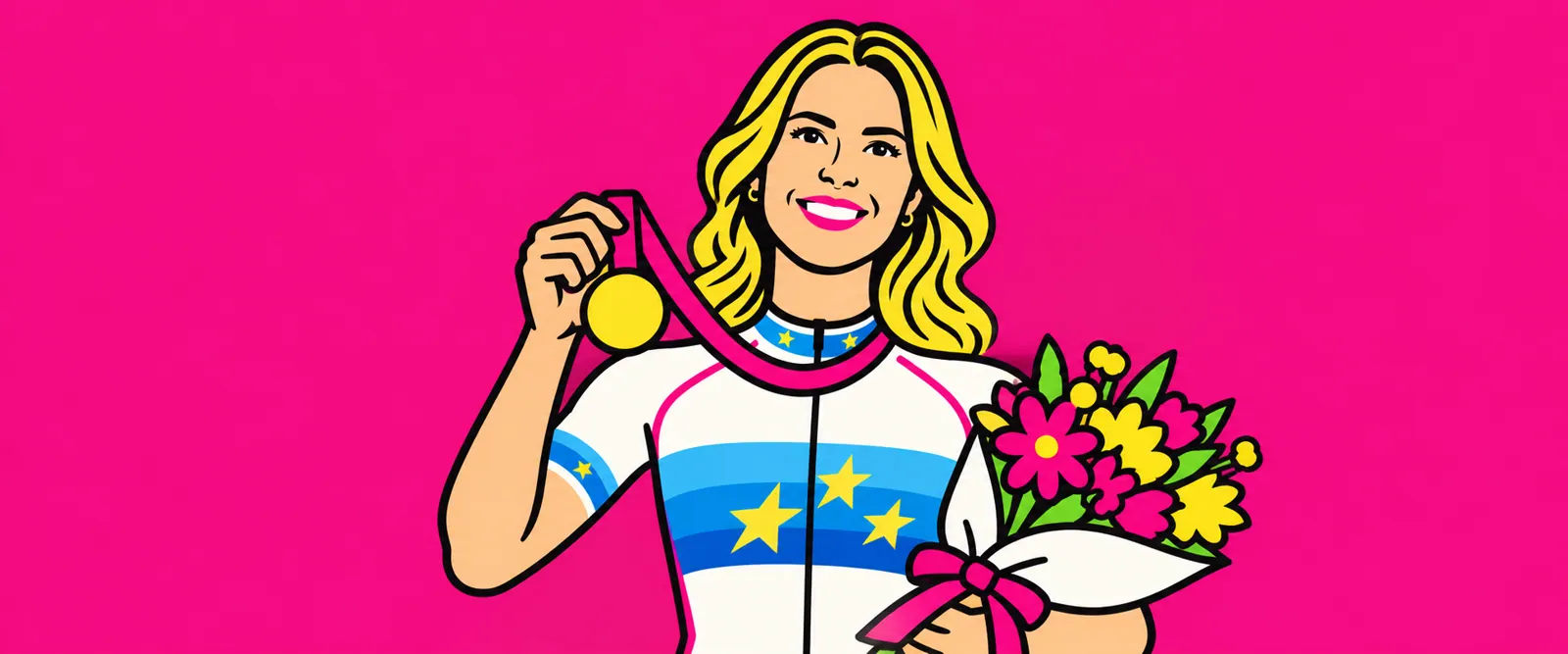
Demi Vollering's record reads like a machine built it: seventy wins, four Monuments, two Tours de France Femmes, a Giro, a rainbow jersey. The woman behind it would tell you it began somewhere much quieter — among the greenhouses of South Holland, with a bike, a sister, and a sentence she now calls her life quote.
"It all starts with dreaming. And dreaming starts with moving."
The eldest of four, in a grower's family
Pijnacker sits between Rotterdam and The Hague, in the flattest corner of a flat country. It is greenhouse land. The Vollerings grow flowers there, and Demi is the eldest of four children — Jake, Nena and Bodine followed. In her own telling, the bike arrived early and never left.
"I grew up in Pijnacker as the eldest of four in a greenhouse grower family. I fell in love with cycling early on, playing on the bike in our neighbourhood and participating in local 'fat tire' races."
She was not the loud kid in the room. The girl who now attacks the best climbers in the world was, by her own account, shy — and school was simply the thing standing between her and the ride home.
"As a young kid I was really shy. And I didn't like school. It just wasn't for me. So, as soon as we got out of school, I couldn't wait to get back on my bike and ride as fast as possible back home. I would change into my old clothes and go out to the garden and play with my sister."
No pocket money: what the greenhouse taught her
A nursery does not take days off. Plants need water, heating fails at night, and somebody has to get up. That rhythm is the first thing Vollering reaches for when she explains where her work ethic came from.
"My father is a grower. In a business like that it's always hard work. My father always has to be 'on'. A day of doing nothing doesn't exist. We didn't really have pocket money. We had to work for our money. I was never angry or disappointed about it. I actually always thought it was good. That was important in my childhood, and it helps in a life in top sport."
Holidays and weekends meant helping her father. The lesson was simple and it stuck: if you want something, you roll up your sleeves. Almost every coach who has worked with her since has described the same thing in different words — the rider who does the session in the rain because the session is on the plan.
The Florist
Before she was a bike racer, she was a trained florist. Vollering took the vocational Flower Design course, then spent two years working in several flower shops, filling the gaps back at her father's nursery. As a student she would ride out to the growers around Pijnacker to ask for flowers to practise her arrangements with.
"I didn't grow up dreaming of winning the Tour. I worked in my family's flower company and several other shops. And I loved moving from a very young age."
When the 2024 Tour de France Femmes started in the Netherlands, stage 1 ran past those same greenhouses. She was leading out the sprint for a teammate, in the defending champion's role — and she noticed.
"It's really funny to be again in that area. It feels like a different lifetime."
The nickname — The Florist — could have been a way of marking her as the outsider in a peloton full of riders who had been in development programmes since they were teenagers. She never treated it that way. The flowers are not a quirky footnote. They are where the discipline, the early mornings and the love of being outside all come from.
The late start
For a while she tried to do everything at once: cycling, speed skating, and a floral career she did not want to let down. The KNWU put it neatly — the work ethic that made her also got in her way, because she did not want to disappoint the shops that employed her. In 2018 she finally chose the bike full-time. She was 21.
It happened fast. In April 2019, as a first-year pro with the small Parkhotel Valkenburg team, she finished third at Liège–Bastogne–Liège — having reconnoitred the course and ridden every climb flat out beforehand. On the podium she cried. Asked about it years later, she laughed.
"Oh, yes. That was terrible! … It was cold and wet and all I said to myself from the start was: hang in there."
A camper van and a tent
Stardom has not changed her taste for simple things. With her partner, Jan de Voogd, she converted a Mercedes Sprinter into a camper with a bike garage in the back and the bed above it, and used it to scout Tour stages in the Vosges. She lives in Switzerland now, for the mountains.
"Jan once took me to a really fancy hotel. Then I told him I'd much rather be in a tent at a campsite. I don't need much — it's always been that way. I still enjoy every day when I get on the bike, even now that it's my job."
"I always imagine that the mountains are calling me."
Ask her whether she prefers racing or training and the answer tells you a lot about the person: 'If I needed to choose, I'd say training.' The same interview carried a headline that tells you the rest — 'I want a lot, I want to win every race, I think.'
Four seconds
Then came the 2024 Tour. A crash cost her the yellow jersey; she fought back and won on Alpe d'Huez, and still lost the race by four seconds to Kasia Niewiadoma — the closest finish in Tour history. Months later, she was unusually honest about what had really beaten her.
"I wanted to win the Tour de France really badly, of course. But the fear of losing was almost bigger than the will of winning."
She didn't call it a tragedy. She called it a 'big life lesson' — one she said would help her in every big race where the pressure was on. Then she did something riders almost never do from the strongest team in the world: she left SD Worx for FDJ–SUEZ, to build a team around her instead of being one leader among several.
It all starts with dreaming
Everything Vollering says in public comes back to one idea. It is on her website, in her Instagram bio, at the end of her race posts. It would be easy to treat it as a slogan. She insists it is not.
"My life quote, "It all starts with dreaming," isn't a fairytale to me. I truly believe in dreaming, in chasing those dreams, in manifesting them — and in never letting anyone tell you that you're not made for them."
"If you have a dream, you must do everything to make it come true."
In 2025 she turned the idea into a project, Move to Dream — first a Strava club, now a platform about movement, mental wellbeing and longevity. The point, as she describes it, is not speed.
"Movement is more than performance. It's how I process things, find clarity, recharge mentally, and reconnect with myself. … It's not about how fast or how far you go. It's about showing up — for yourself."
"As a young kid I had big dreams and I was full of energy. That young kid is still inside of me. Never ever give up on your dreams. No matter your age, background or anything else."
Speaking up for the girls watching
The 2025 Tour ended with her second overall and a press conference full of questions about riders' weight. She answered them, and then — feeling her words had been taken out of context — explained herself to the people she cares most about reaching.
"The biggest priority is to be healthy."
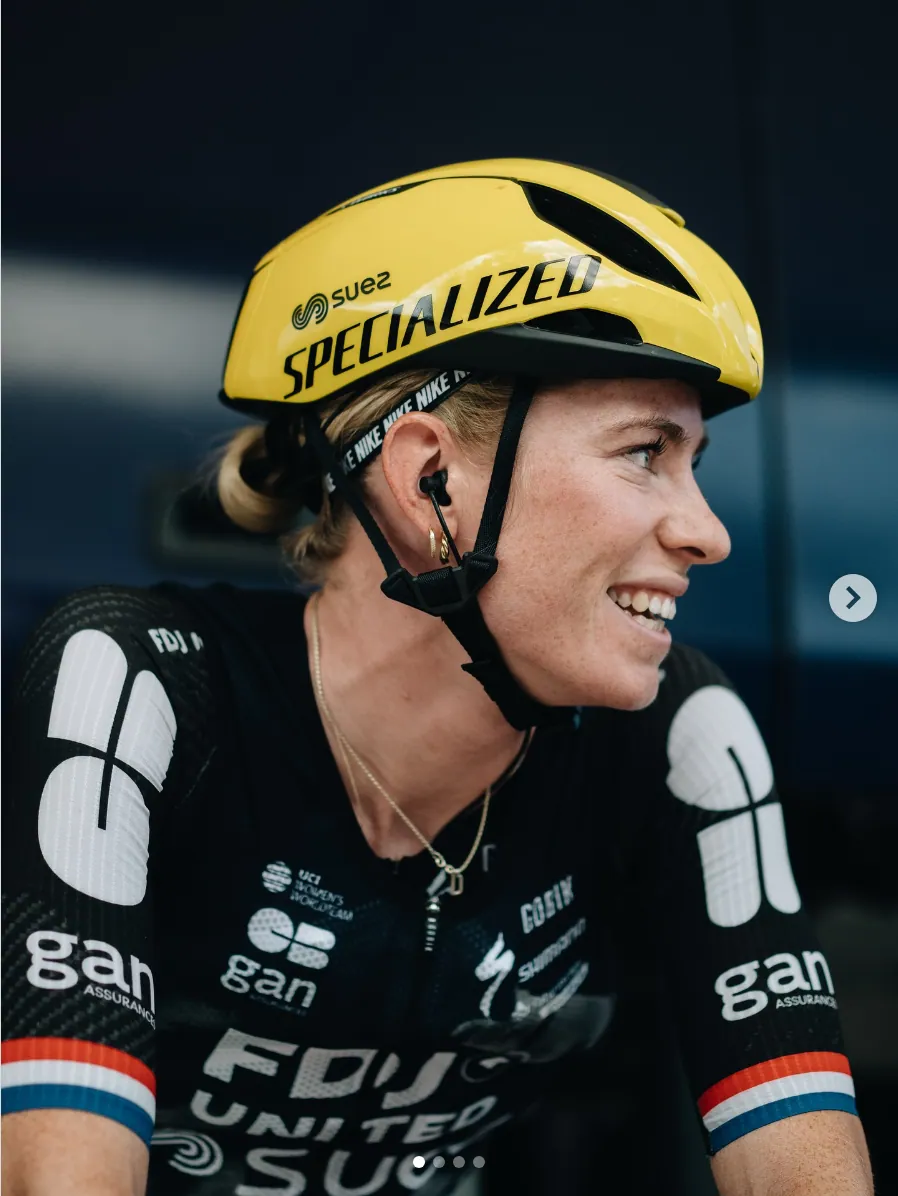
"Cycling, and sport in general, is about far more than a number on a scale. It's about knowing your body, fuelling it right, feeling mentally well, and building a career that lasts. For me, longevity is key."
"From day one, it has never been only about racing and winning. It has always been about using my platform, about motivating and educating the younger generation. … As a child, having access to sport was one of the greatest privileges I had."
2026: the dream, answered
The season that followed at FDJ–SUEZ answered the four seconds in full: Omloop Het Nieuwsblad, the Tour of Flanders, La Flèche Wallonne, Liège–Bastogne–Liège, the Giro d'Italia Women. At the Tour, the time trial on day four set it up.
"An important day against the clock, or actually where it is a fight against yourself. Happy with how it felt, 4 days down, 5 to go."
Before the final stage, she posted a photo with the same words she always uses. Hours later she finished alone in Nice, in the yellow jersey, to win her second Tour.
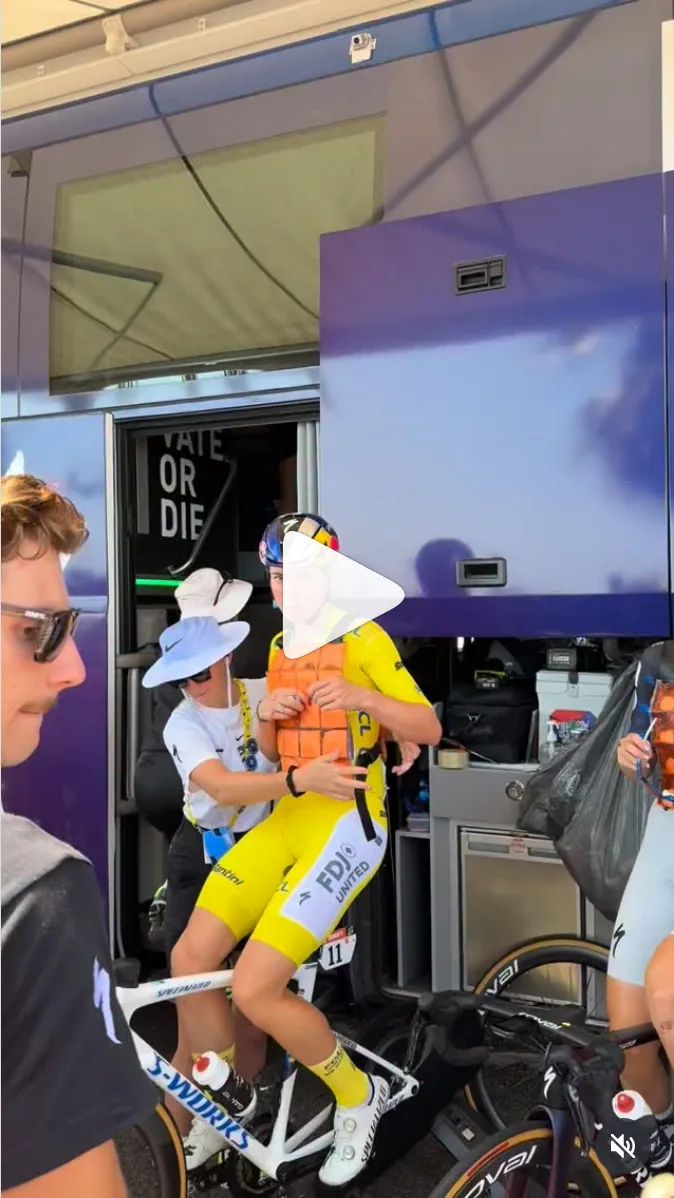
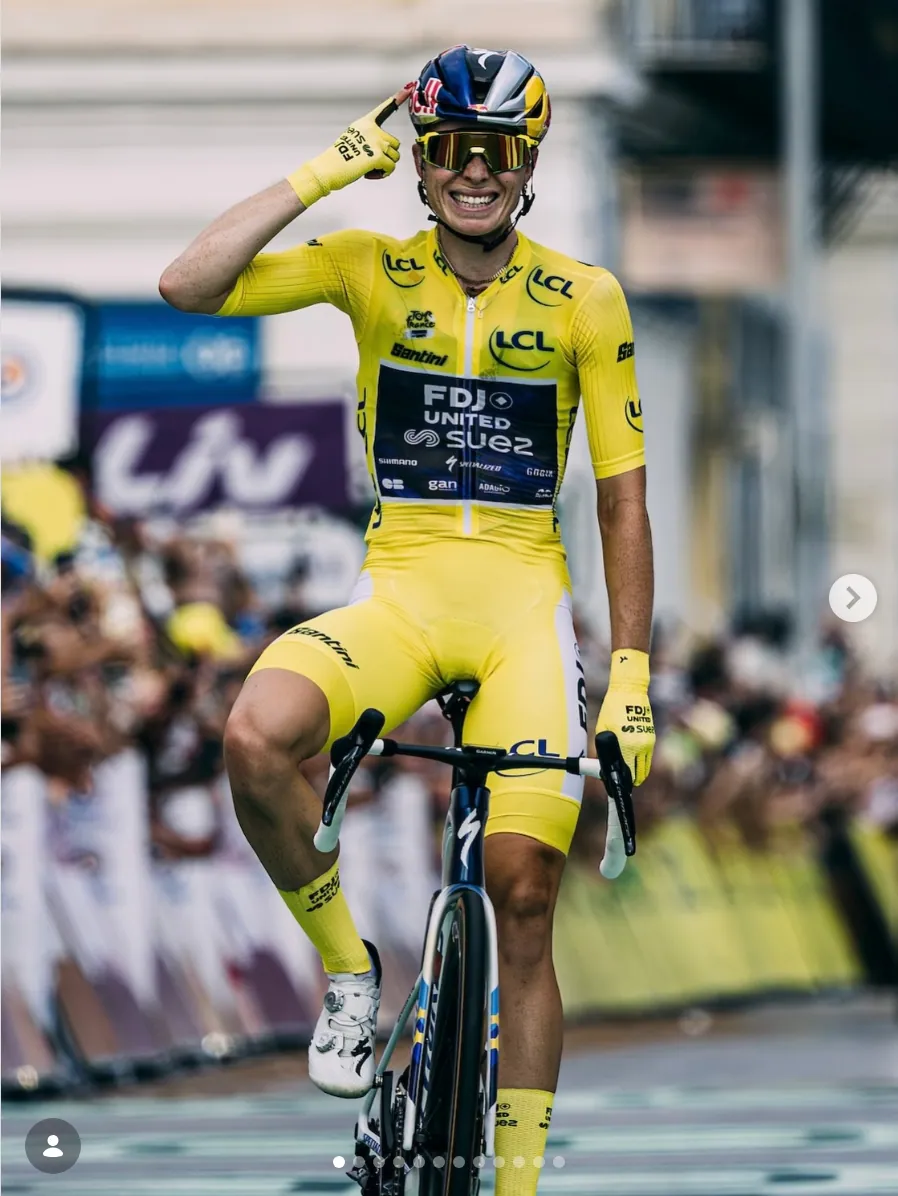
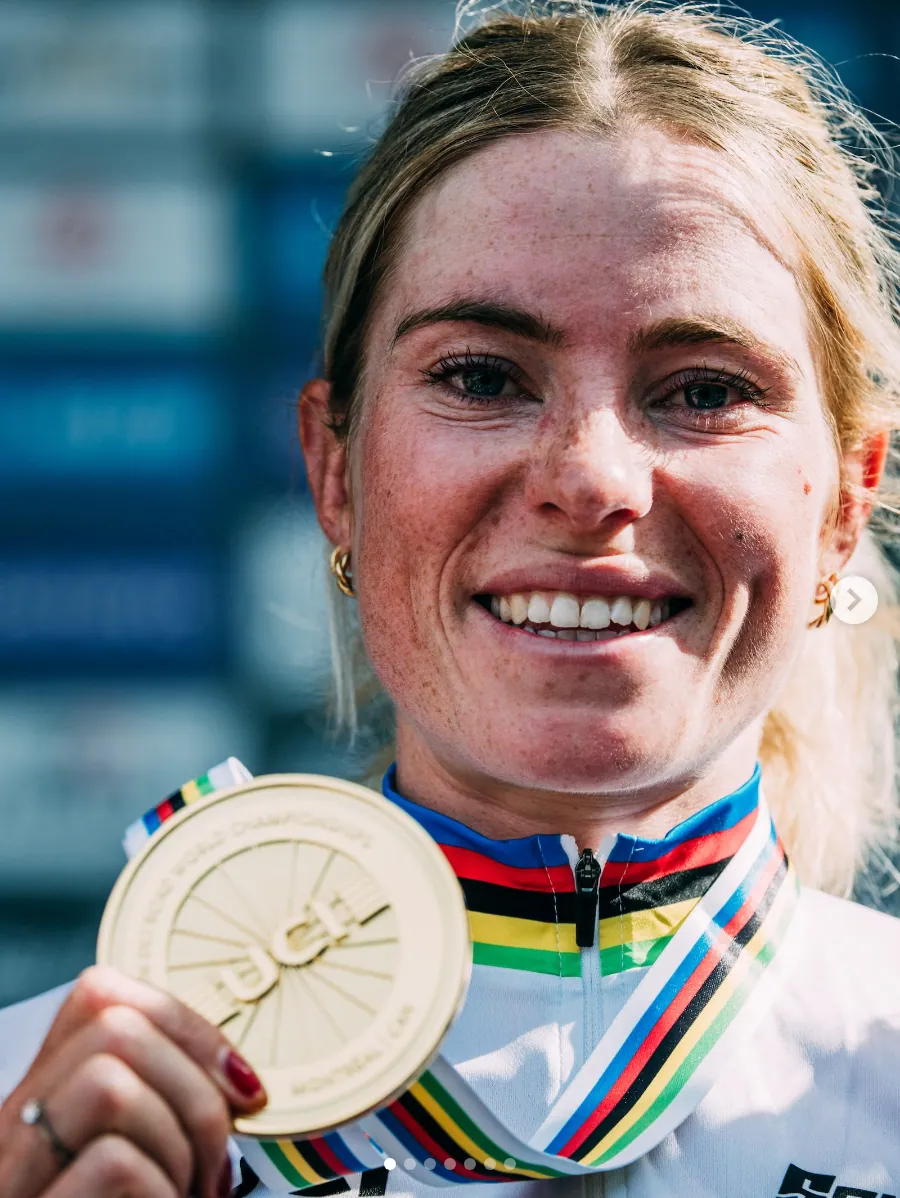
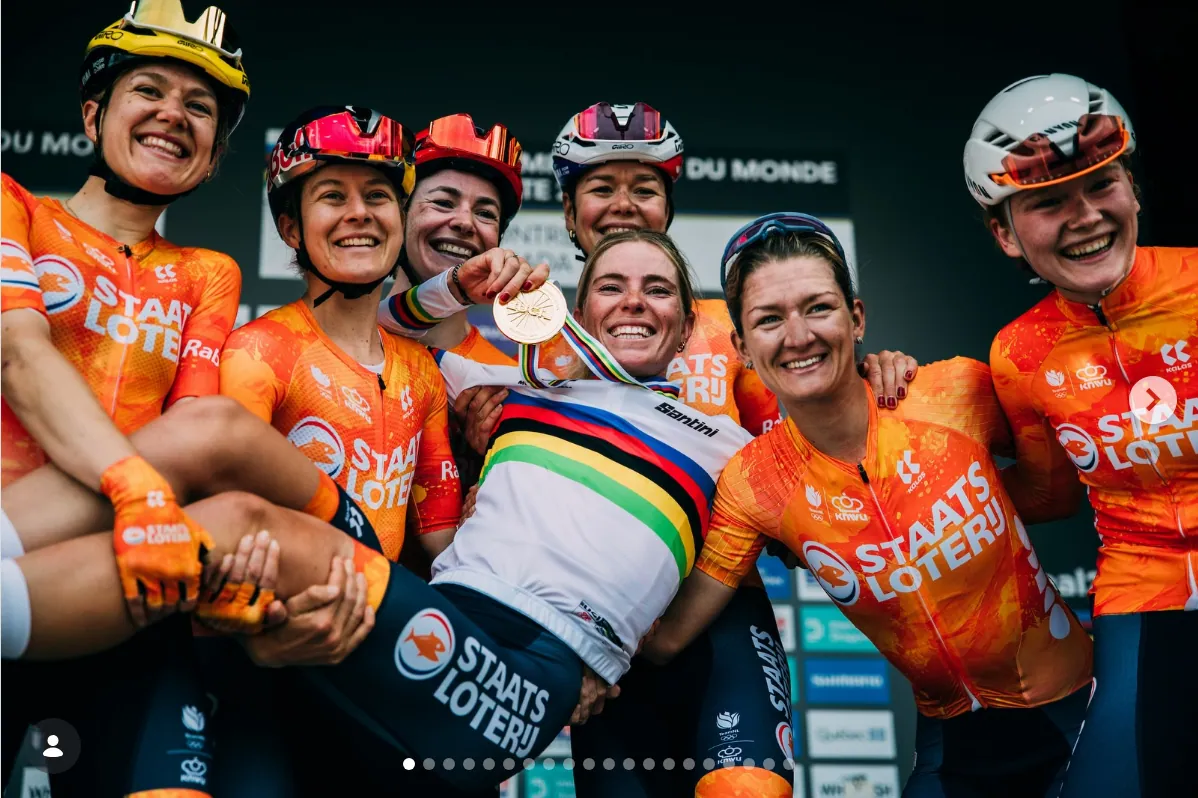
In September, in Montréal, she outsprinted Niewiadoma-Phinney on the last lap of Mount Royal to become world road champion — the rival who had beaten her by four seconds, beaten at last in the race that matters most.
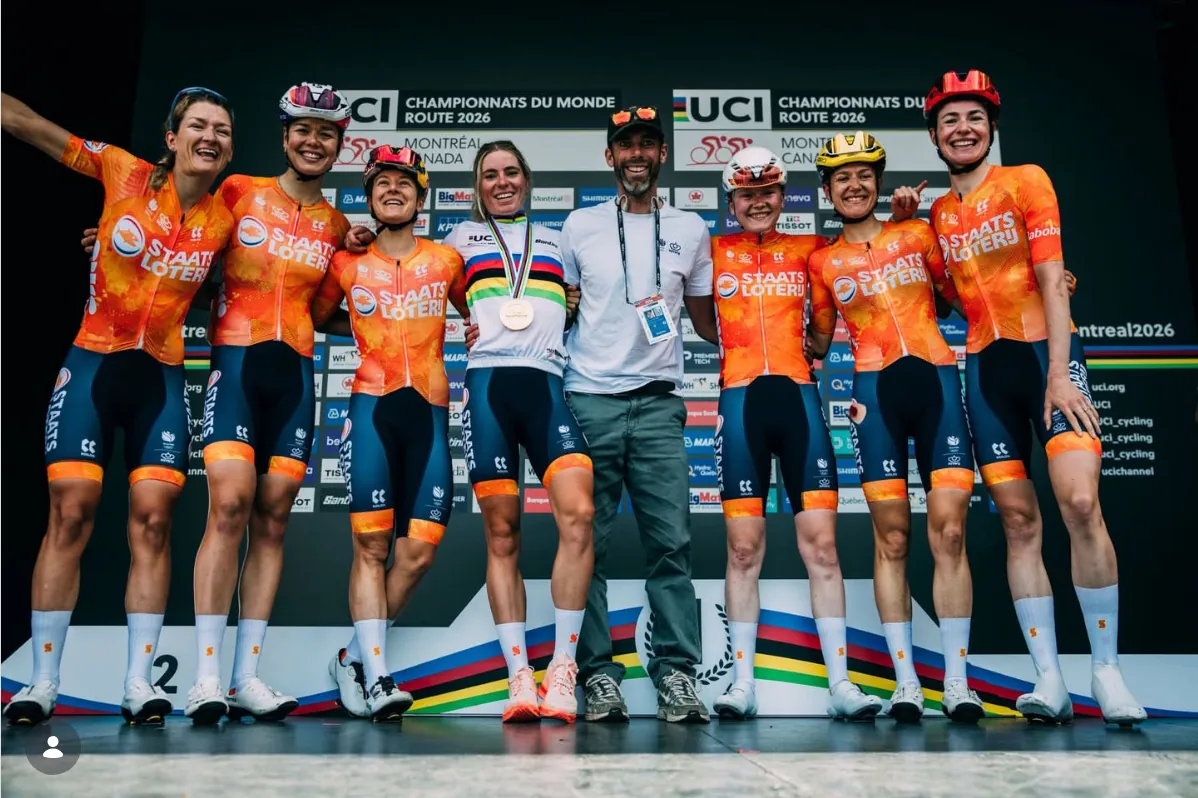
"Putting on this jersey for the first time in my life is a moment I will cherish forever. This is so much more than just a jersey, it's a dream, a milestone, a feeling, and an emotion I will carry with me forever."
The good days and the other days
Even at the top of the sport she keeps doing the unglamorous thing: showing the days that don't look like a highlight reel. In September 2026 she posted about a day when her hormones changed how she felt, physically and mentally — and explained why.
"Especially if young girls are following me, I don't want them to think that being a professional athlete means waking up motivated and feeling strong every single day. Life is an endless process, with highs and lows. They don't define you, but how you deal with them will."
She is 29, and now the marked rider in every bunch. The shy girl racing home from school to play in the greenhouse garden is still in there — she says so herself. So is the florist, who learned that the day starts early whether you feel like it or not. And so is the sentence that holds it all together.
"Your dream matters!! And it's worth the fight."